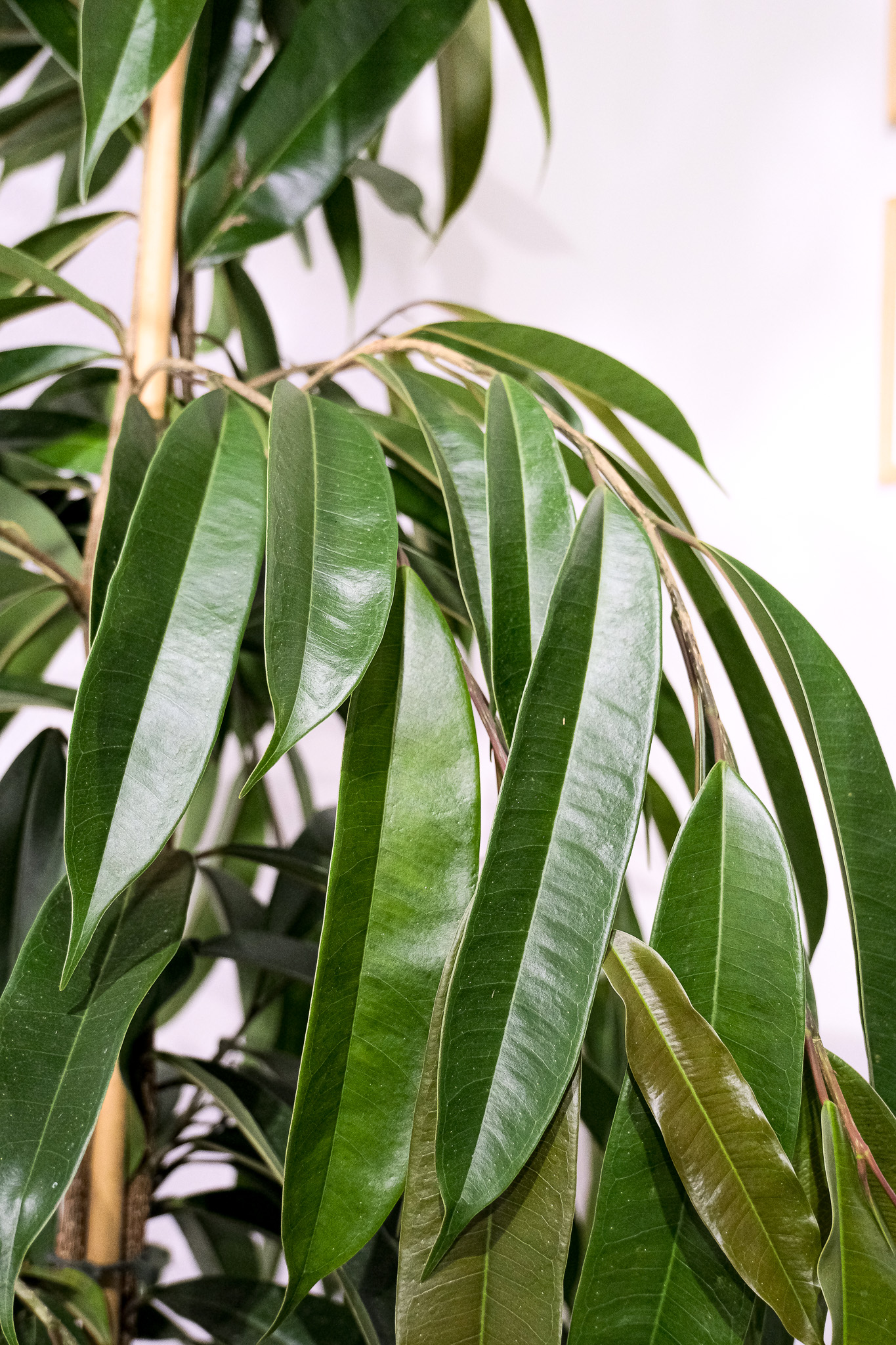
Phoenix Canariensis
550 MDL
350 MDL
The Phoenix Canariensis, commonly known as the Canary Island Date Palm, is a majestic and versatile palm tree that brings a touch of the tropics to any landscape. Native to the Canary Islands, this stately palm is renowned for its robust trunk, crowned with a dense canopy of feathery, arching fronds.
Beyond its visual beauty, the Phoenix Canariensis is valued for its resilience and adaptability. It thrives in full sun and well-drained soil and is relatively drought-tolerant once established. This palm is also capable of withstanding mild frost, making it suitable for a variety of climates. This palm tree is a real joy to grow and easy to care for if good drainage and enough light can be provided and they have enough space within a room.
The plant comes in a basic nursery pot.
We are happy to suggest and help you choose a new and appropriate one.
Related products
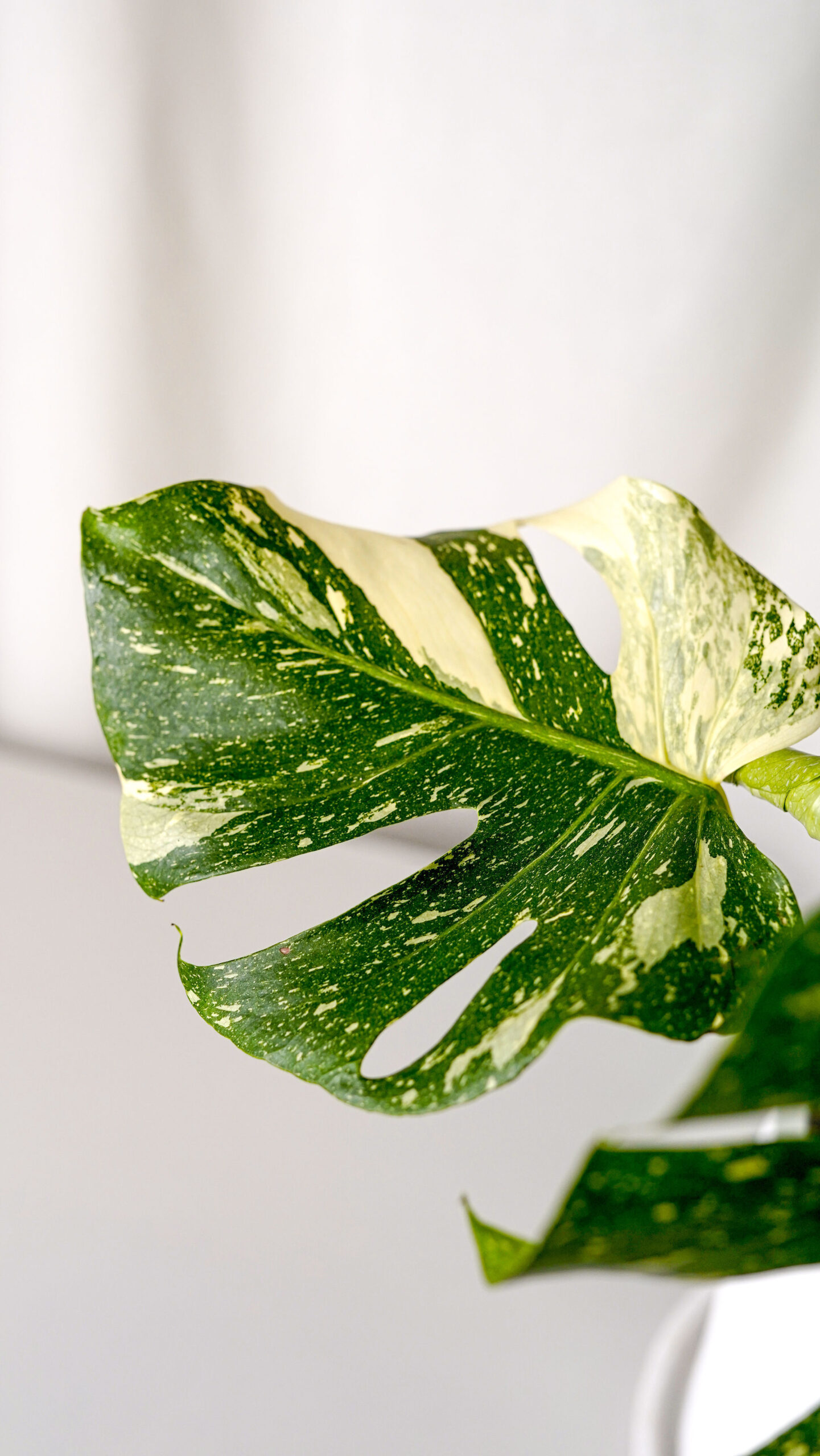
The Monstera Thai Constellation is like a sky full of stars: large, variegated leaves that make you feel as if nature picked up a brush and had a moment of “cosmic inspiration.” Easy to care for, it only requires indirect light and a corner of your living room or bedroom to showcase its tropical splendor. Discover how to nurture this celestial plant in our Plant Library.
The plant comes in a basic nursery pot.
We are happy to suggest and help you choose a new and appropriate one.
If you want to create a tropical holiday atmosphere in your home, you can’t beat the areca palm, with its elegantly arched leaves.
The Areca Palm, also known by its Latin name Dypsis Lutescens, is native to Madagascar. It is a fabulous houseplant, often grown for its dramatic tropical effect. It’s particularly good at making a visual impact wherever it’s placed. This makes it popular with plant lovers and interior designers.
With smooth, bamboo-like stems and full but narrow leaves, this green beauty needs plenty of room to spread out. We recommend placing it in a spacious area such as a reception, kitchen, hallway or living room. If you have plenty of light in your bedroom it would also work well there.
The plant comes in a basic nursery pot.
We are happy to suggest and help you choose a new and appropriate one.
Asparagus plumosa or asparagus fern is neither fern nor asparagus, although it looks similar and is closely related to the common edible garden asparagus. Its presence in the house brings a “forest” vibe and it really likes hanging in baskets on the terrace or balcony during the summer.
Indoors, the key to a robust asparagus fern is to keep the plant well-watered, bushy and dense so that the lace-like foliage forms an attractive mound.
The plant comes in a basic nursery pot.
We are happy to suggest and help you choose a new and appropriate one.
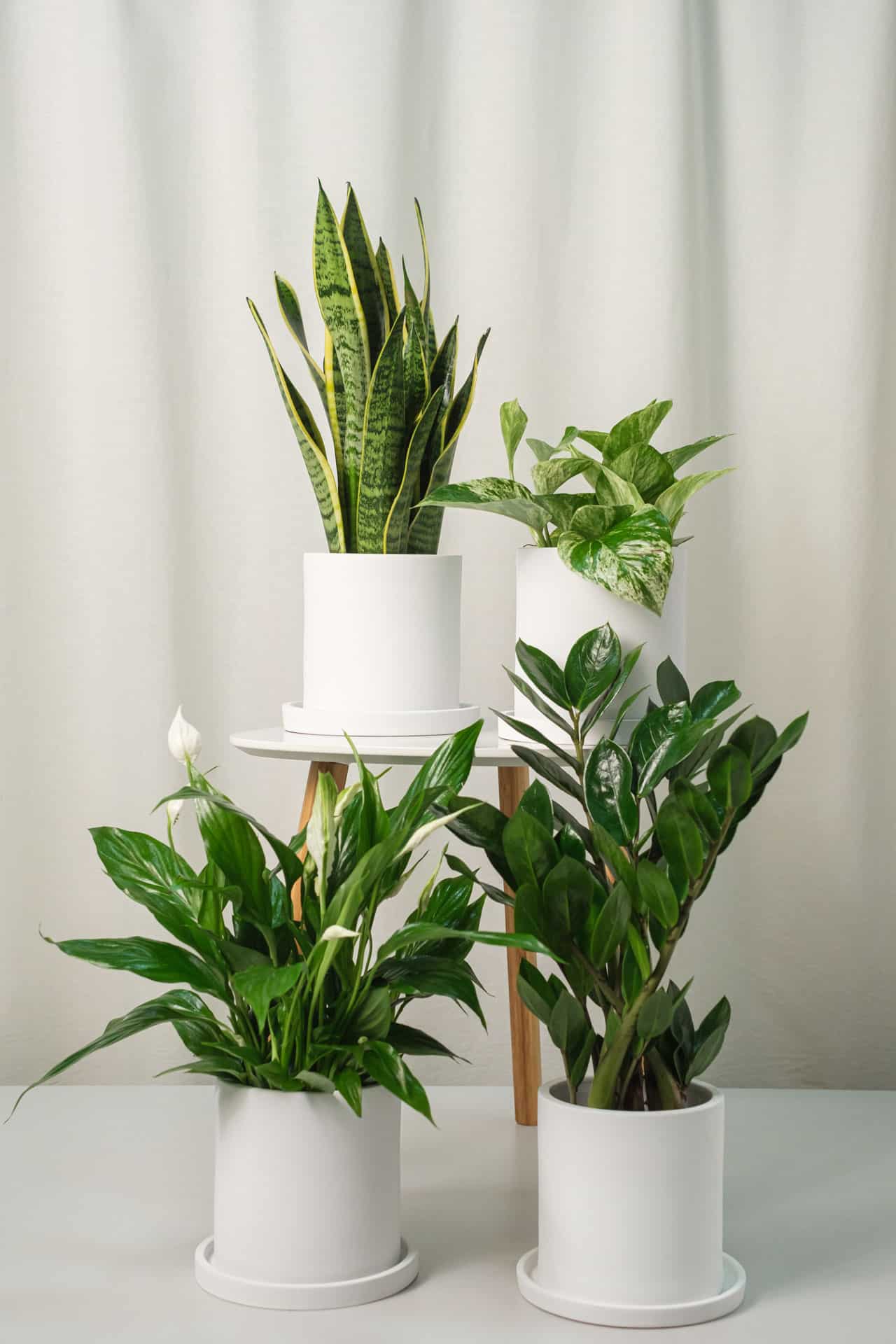
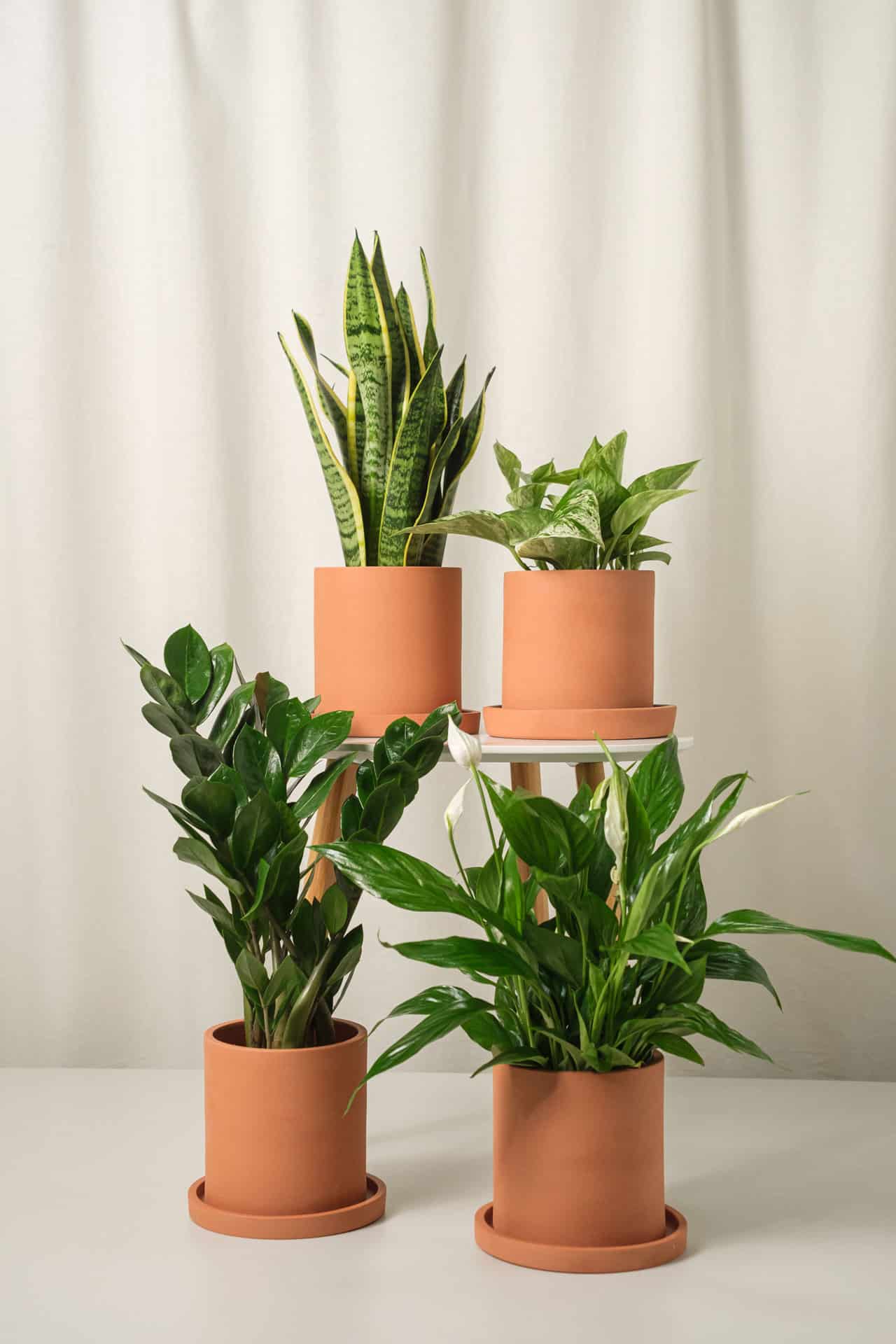
This set features four easy-care plants that thrive in low light, perfect for brightening up dark corners. They can be grouped or placed in different rooms. The set includes the resilient ZZ plant, elegant Spathiphyllum, hardy Snake plant, and vibrant Scindapsus.
*Enjoy free transplanting and delivery with this purchase. Choose between clay or plastic pots for your set.
*You save more when you buy a plant set. Additional discounts cannot be applied.
Originating from the Mediterranean countries, this myrtle tree is like a little vacation on the southern coastline. It doesn’t require a sophisticated diet but loves bright spots. Hailing from the Mediterranean and North Africa, it has been cherished as an indoor plant since ancient times. Visit the Plant Library for care tips.
The plant comes in a basic nursery pot.
We are happy to suggest and help you choose a new and appropriate one.
We have to admit it: bushy or prickly, with round or lobed leaves, succulents are incredibly popular. In some homes, you can find impressive collections or creative arrangements. The range of colours and textures is a feast for the eyes.
Succulents are a real blessing when we travel a lot, are too busy or simply forget to water them. This is very important! The leaves, stems and roots of succulents are thick and fleshy, which allows them to store water and withstand harsher conditions with such stoicism. In short, loyal plants!
In warm weather, water more generously if you notice that the soil in the pot has dried out. In late autumn or winter, water less frequently, once a month. Overwatering and waterlogged soil are the most common causes of loss.
Fun fact: the only continent without native succulents is Antarctica.
The plant comes in a basic nursery pot.
We are happy to suggest and help you choose a new and appropriate one.
The Boston fern is one of the easiest ferns to care for, which has made it a popular houseplant for decades. It is not difficult to look after, but it does require some special care. The most important thing is to give it the ideal growing conditions: standard room temperature (13-24°C), plenty of humidity and indirect light. If the humidity is too low, the leaves will turn yellow. Another important aspect is the soil. It must be kept moist as one of the main reasons why the plant may not survive is dry soil.
A popular display is a hanging basket. Arranged in this way, the leaves of the plant will arch towards the basket, giving the appearance of floating in the air. Boston ferns are not considered toxic to pets or children. In a pot or hanging from a modern macrame hanger, the Boston Fern is a wonderful addition to the kitchen or bathroom.
The plant comes in a basic nursery pot.
We are happy to suggest and help you choose a new and appropriate one.
Croton Mrs Iceton is a plant that knows how to make an entrance: in shades of green, red and yellow, it looks like the cover of a gardening magazine! Native to the tropical islands of the Pacific, this beauty isn’t afraid of sunlight – in fact, it loves to shine. It’s easy to care for, but it has one little quirk: it doesn’t like to be left in water. Learn more in the Plant Library.
The plant comes in a basic nursery pot.
We are happy to suggest and help you choose a new and appropriate one.
The plant comes in a basic nursery pot.
We are happy to suggest and help you choose a new and appropriate one. s
The plant comes in a basic nursery pot.
We are happy to suggest and help you choose a new and appropriate one.
If you are looking for an entry into the ancient Japanese art of Bonsai, a great place to start is with a Ginseng Ficus. Native to Southeast Asia, it is prized for its whimsically-shaped trunk. The aerial roots of this interesting houseplant grow above the ground. The leaves are dark green, and oval shaped and grow densely, making it perfect for pruning.
To care for this guardian of balance, give it indirect light, moderate watering and regular airing to maintain its health and vitality. Your Ficus Ginseng bonsai can grow anywhere between 16-40 inches indoors and is a very forgiving houseplant, making it perfect for beginner bonsai enthusiasts.
The plant comes in a basic nursery pot.
We are happy to suggest and help you choose a new and appropriate one.