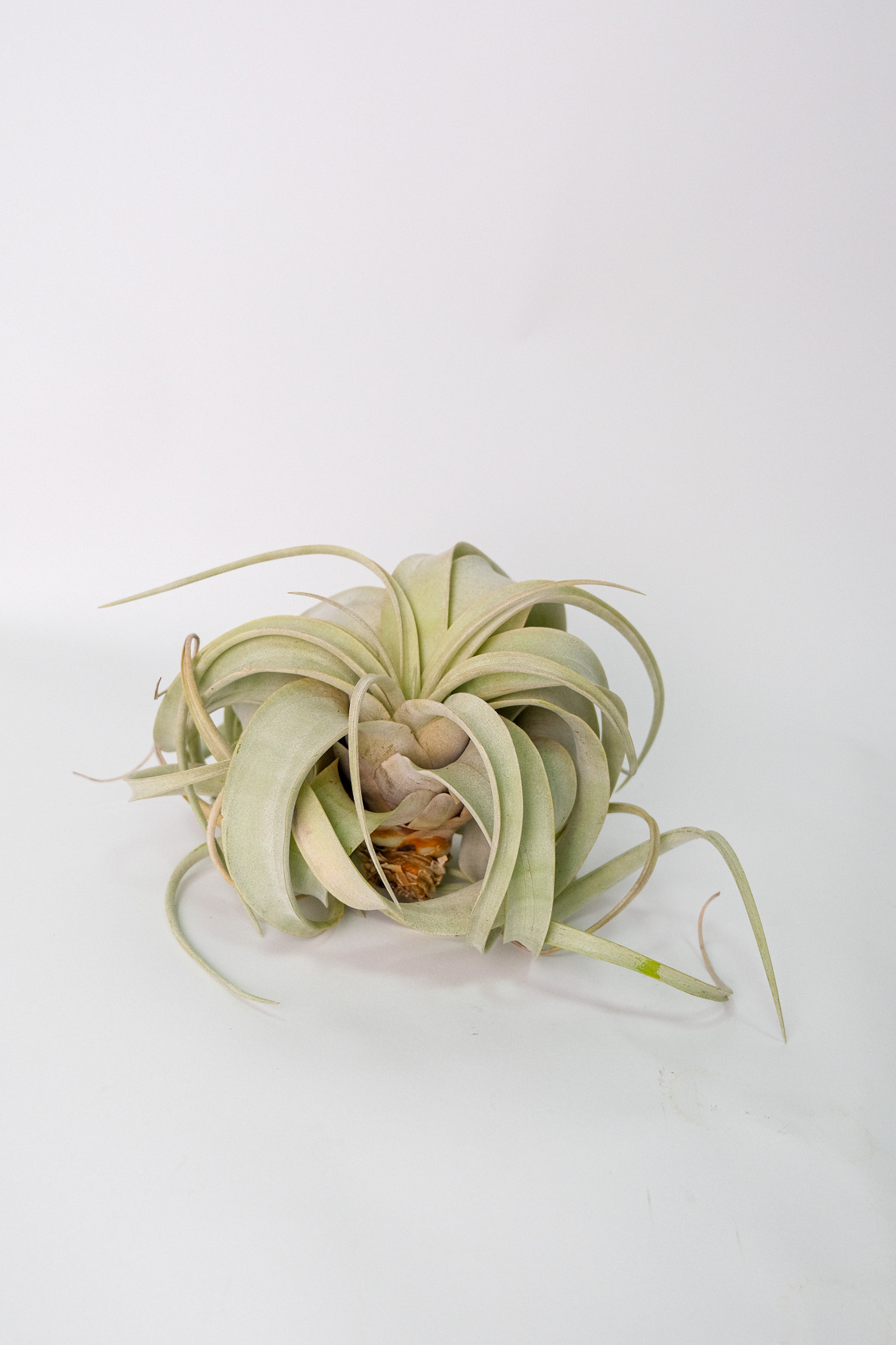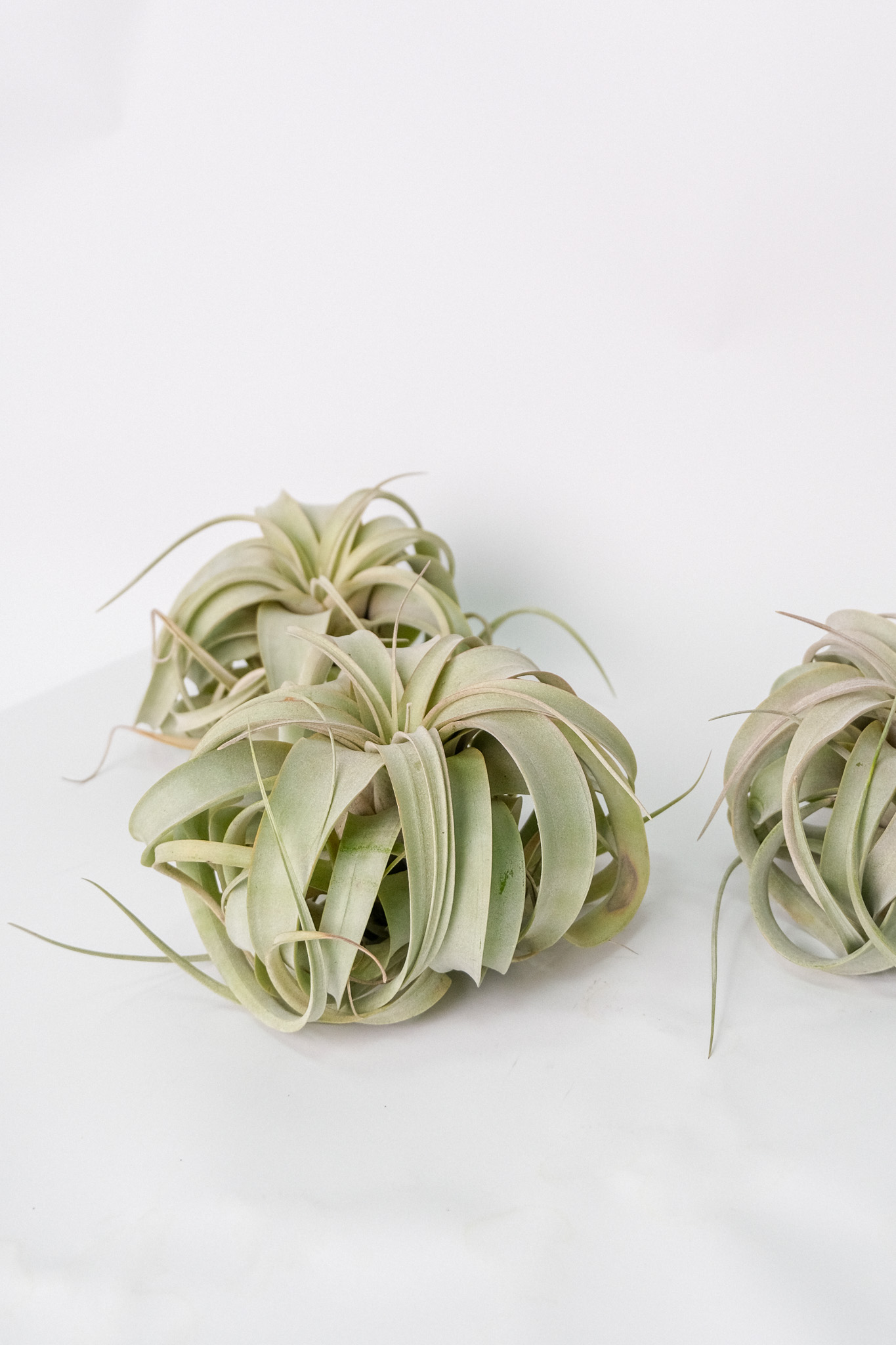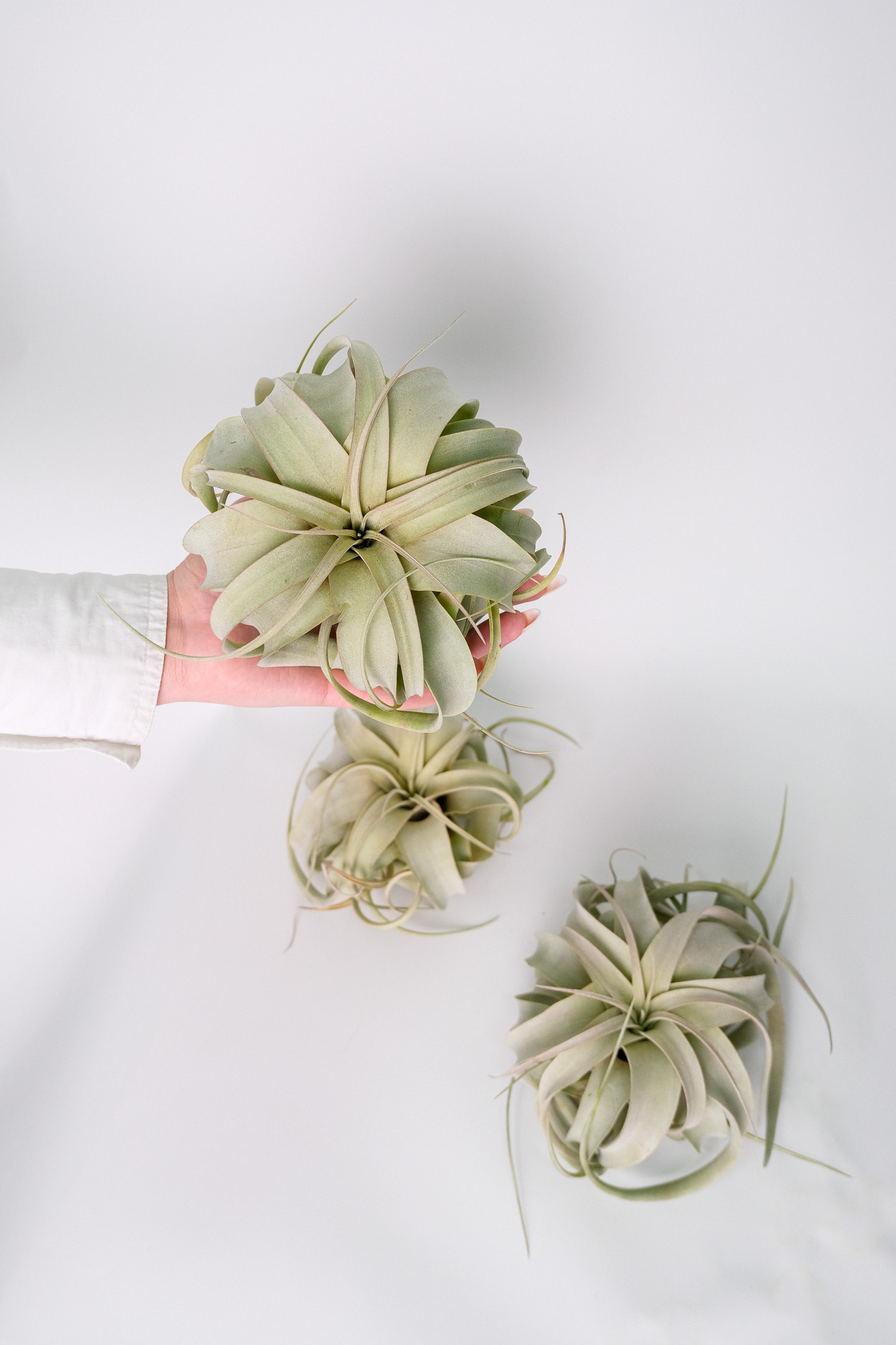
Tillandsia Xerographica (Air Plant)
650 MDL
The beauty, non-toxic nature and very easy care of air plants are attracting more and more people to create their collections. Tillandsia Xerographica is like a mythical bird of the forest, with its delicate, arching leaves resembling angel wings that embrace the air in a tireless dance.
This unusual plant, also known as the ‘Air Orchid’, brings a touch of grace and elegance to any corner of the home. To care for this bird plant, provide it with a moist environment, indirect light and regular fertilisation to maintain its beauty and sparkle.
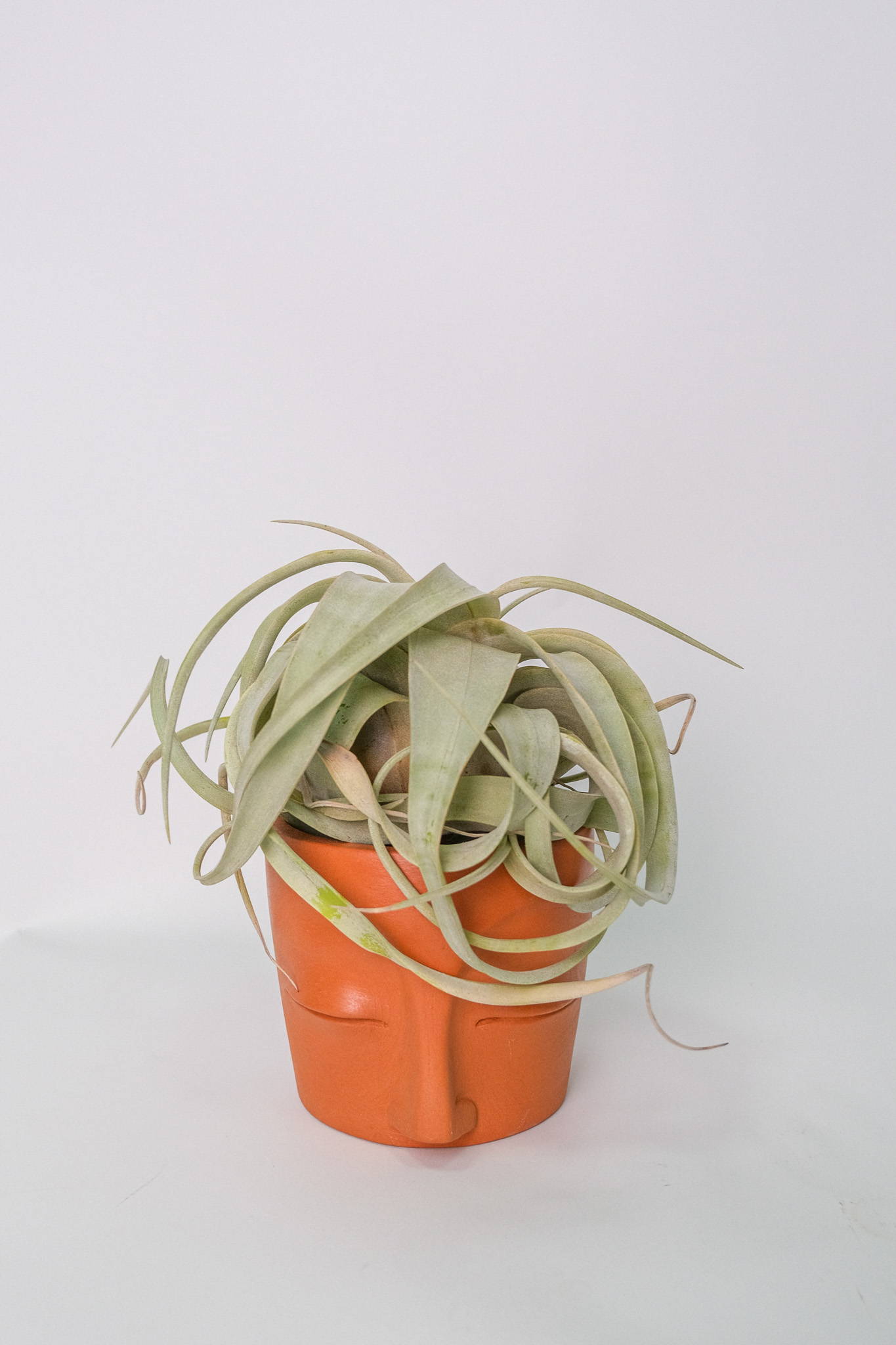
The plant does not require a pot as it does not need soil. However, you can choose a pot for decorative purposes or for another plant.
Related products
relitzia Reginae, often called the Bird of Paradise, thrives in the wilds of South Africa and truly lives up to its majestic name. Position it in your living room or hallway, and you’ll instantly infuse your space with a touch of the jungle, harmoniously blending with urban elegance. Pollinated by birds, it features robust stems strong enough to support the weight of several birds at once. Discover its preferred conditions in the Plant Library.
Only the mature plant is in flower at the moment.
The plant comes in a basic nursery pot.
We are happy to suggest and help you choose a new and appropriate one.
The plant comes in a basic nursery pot.
We are happy to suggest and help you choose a new and appropriate one.
The plant comes in a basic nursery pot.
We are happy to suggest and help you choose a new and appropriate one.
Bay laurel, also known as Laurus Nobilis, is the kind of plant that makes your life easier—and more aromatic. Just place it in a sunny corner or partial shade, and it will reward you with healthy, green leaves. Plus, it doesn’t care much about pests or diseases—like a medieval knight in armor. Just make sure to protect it from the cold, and it will repay you in every dish you cook with it!
Find out what conditions it prefers in Plant Library.
The plant is offered in a simple factory pot.
We recommend and with a great pleasure will help you to choose a new and suitable one.
English ivy (Hedera helix variegata) is one of the most common ivy species and the most widely grown. It is very easy to grow, both in pots and as an ornamental outdoor plant. You’ve probably noticed it on the outside of buildings and houses that look like entrances to a secret botanical world.
Potted ivy requires much less water. Before watering, check the consistency of the substrate, which should be loose but dry on the surface. Be careful not to overwater. For optimal lighting, position the plant near a window to ensure it receives abundant light without direct exposure. Poor lighting can reduce the number of leaves and cause them to discolour.
Indoors, it can be placed on a shelf or taller plant stand to allow it to create that eye-catching cascade of creamy white variegated green leaves. It tends to grow vigorously, providing quick results for those who want to transform their room or garden in a short space of time.
The plant comes in a basic nursery pot.
We are happy to suggest and help you choose a new and appropriate one.
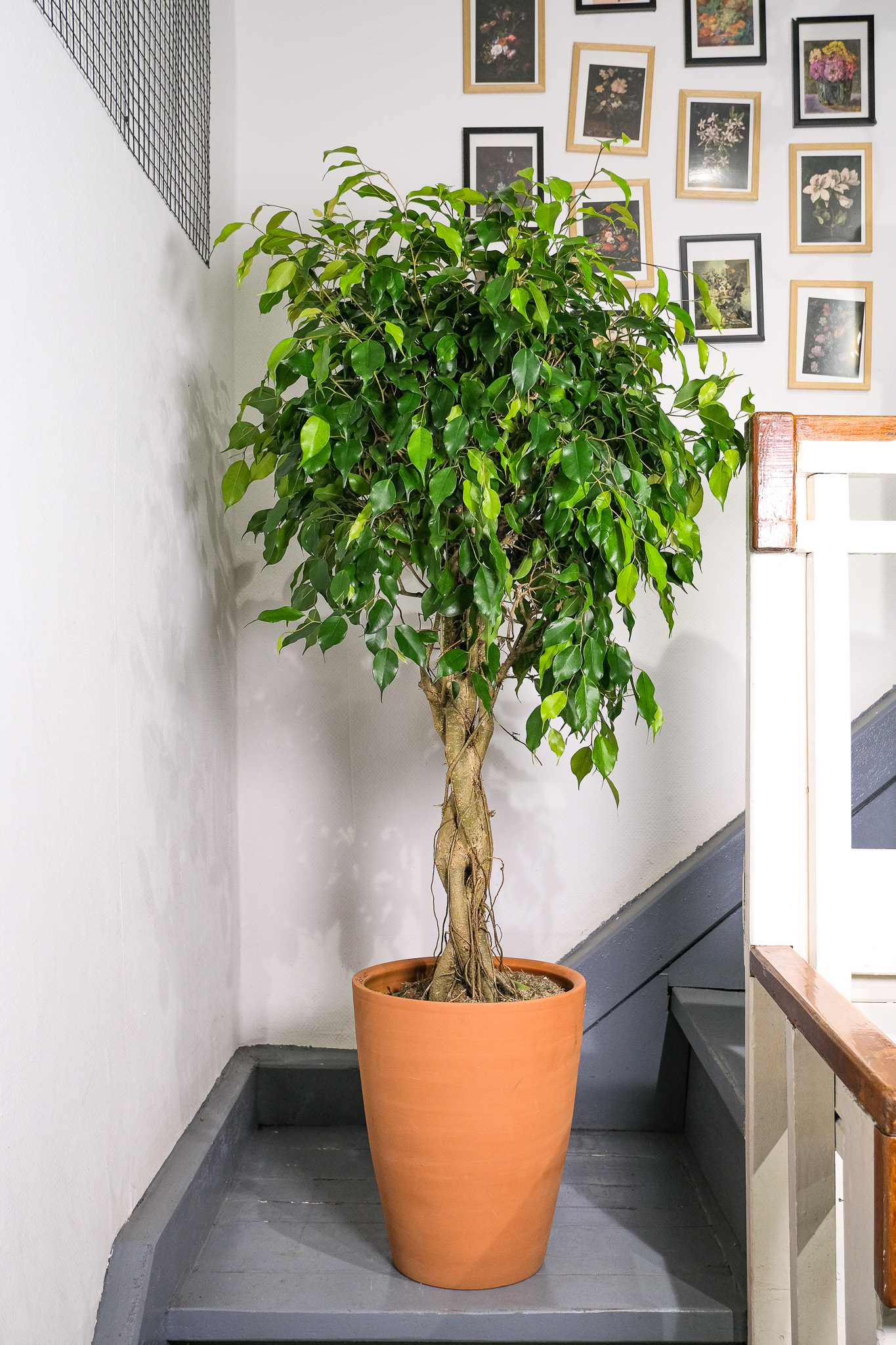
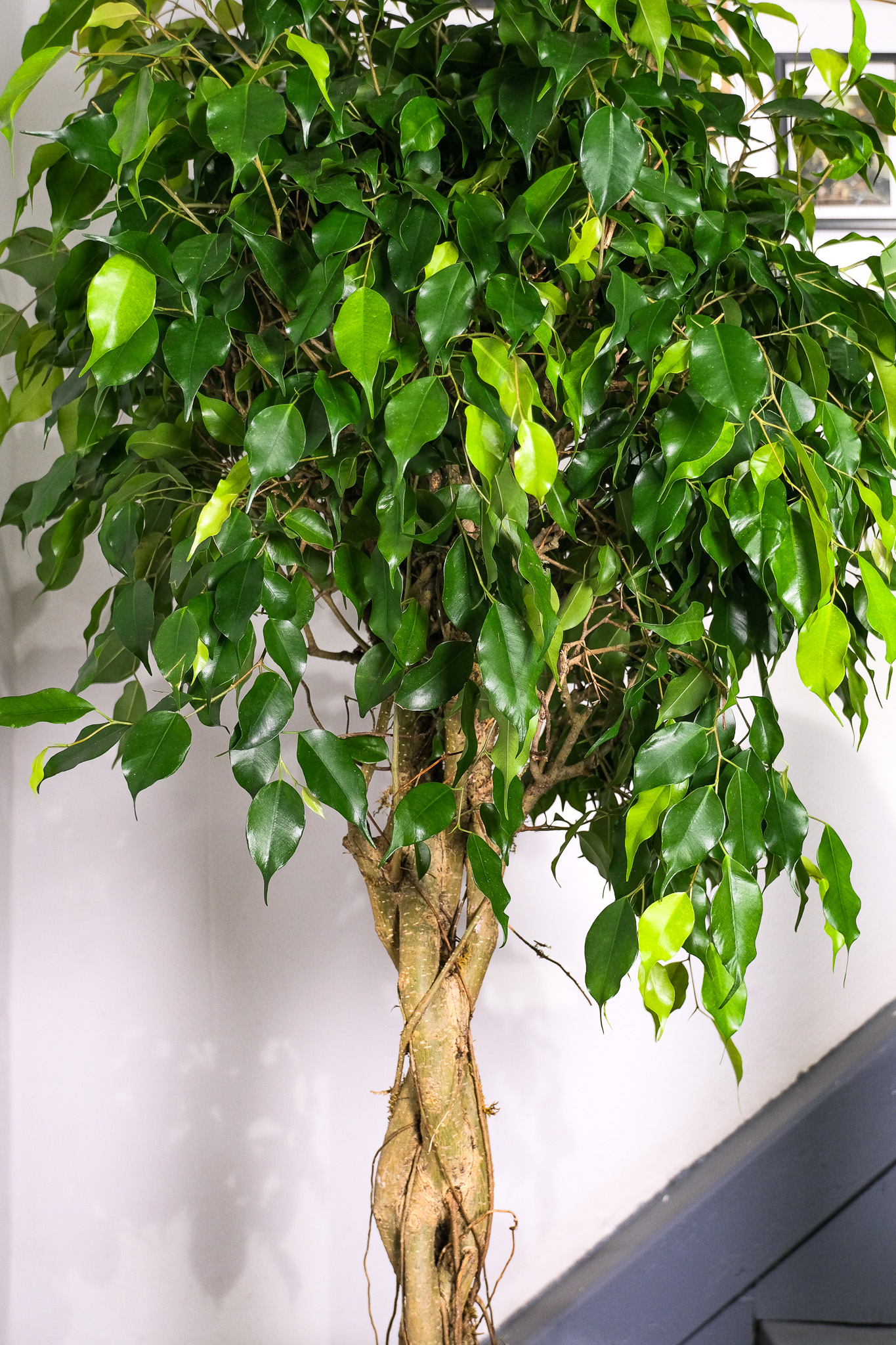
Ficus Be Exotica Twisted looks as if it’s just completed a perfect Pilates session. With its artistically twisted trunk and mirror-like green leaves, it effortlessly transforms your home into a tropical scene. It needs light and a bit of water, but you can rely on it to remain elegantly calm, like a true yogi. Visit the Plant Library for care tips.
The plant comes in a basic nursery pot.
We are happy to suggest and help you choose a new and appropriate one.
Cycas palms, native to Japan and southern China, are true living fossils, having existed since before the dinosaurs. Their curved, rigid fronds seem as if they’ve been plucked from a scene in Jurassic Park. Although they resemble palm trees, they are actually cycads—a fascinating prehistoric species. They grow extremely slowly, adding only a few centimetres per year. It’s a plant that knows how to live grandly yet with minimal fuss. Learn how to care for it in the Plant Library.
The plant comes in a basic nursery pot.
We are happy to suggest and help you choose a new and appropriate one.
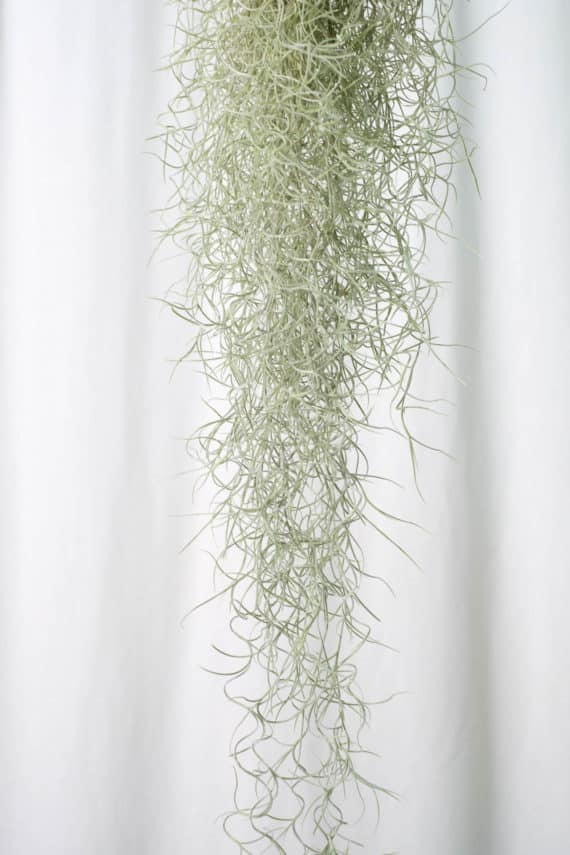
Spanish moss, also commonly known as Old Man’s Beard, is a tropical evergreen epiphytic perennial native to tropical America. Its latin name is Tillandsia usneoides. The name ‘Spanish Moss’ is a misnomer as this plant is neither Spanish nor a moss. It is a bromeliad, and the name has nothing to do with where it comes from. The beauty, non-toxicity and easy care of air plants are attracting more and more people to start their collections.
Since it likes relatively humid conditions, growing it in a light, bright bathroom or kitchen can be ideal – but Spanish moss can also thrive in other parts of your home as long as you make sure it gets the humidity and moisture it needs. When watering, ensure that water does not collect between the leaves, as this can cause them to rot. It is a good idea to tilt the plant slightly downwards or shake it gently after watering to avoid waterlogging.
The plant does not require a pot as it does not need soil. However, you can choose a pot for decorative purposes or for another plant.
Asparagus plumosa or asparagus fern is neither fern nor asparagus, although it looks similar and is closely related to the common edible garden asparagus. Its presence in the house brings a “forest” vibe and it really likes hanging in baskets on the terrace or balcony during the summer.
Indoors, the key to a robust asparagus fern is to keep the plant well-watered, bushy and dense so that the lace-like foliage forms an attractive mound.
The plant comes in a basic nursery pot.
We are happy to suggest and help you choose a new and appropriate one.
Thanks to its glossy appearance, the ficus spreads an unmistakable feeling of well-being, especially if you position it as it likes: in a bright place, but away from direct sunlight. In its natural habitat, it can reach up to 30 metres in height. Don’t worry, you won’t have to drill a hole in the roof, as as a houseplant it usually reaches 2-3 metres. How to care for it, find out in Plant Library.
The plant is offered in a simple factory pot.We recommend and gladly choose a new and suitable one.
Over the past few years, the Ficus Lyrata has been creating waves of admiration around the world. Thanks to its numerous appearances in popular design magazines, blogs and social media, it has been catapulted to superstar status in the plant world.
Any plant is a positive addition to your living or working space, but some plants have a much richer visual impact. Take Ficus Lyrata, for example. This plant is almost a work of art in itself. You can’t miss its violin-shaped leaves, crisscrossed with distinct, pale veins that add texture. The best part is that as the leaves grow larger, they become even more impressive.
Don’t worry if it loses a leaf or two after delivery – it needs time to adapt to its new home. It’s perfectly normal. It may also shed a few leaves in winter, and while it is small, the Ficus can live temporarily on shelves. Once it has grown, it will be placed on the floor because of its larger size.
The plant comes in a basic nursery pot.
We are happy to suggest and help you choose a new and appropriate one.